
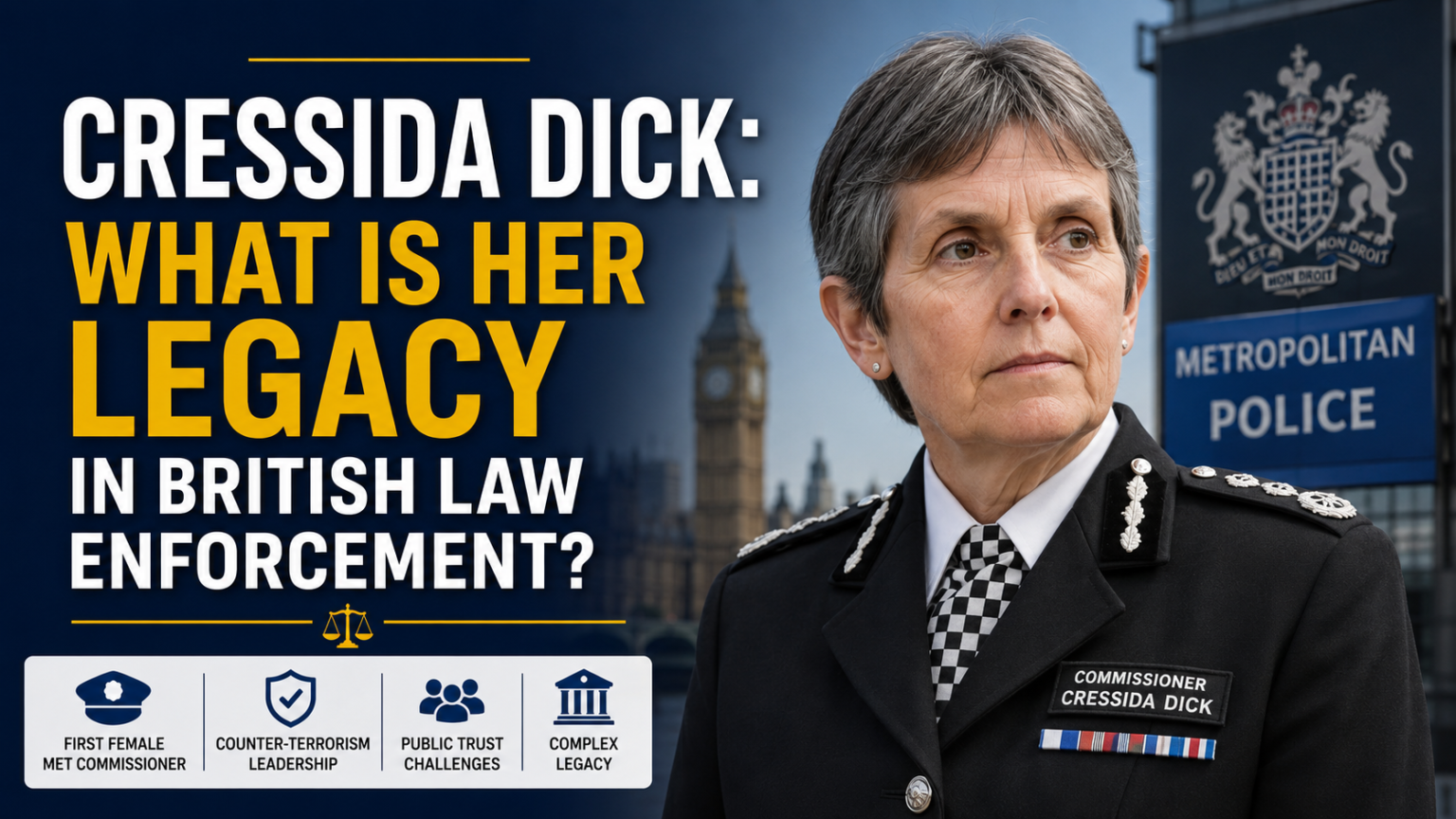

Dame Cressida Dick is widely regarded as one of the most influential and debated figures in modern UK policing. Her legacy is defined by two major themes: breaking barriers as the first female Commissioner of the Metropolitan Police Service and leading the force through intense public scrutiny, major terror threats, and internal misconduct controversies. Her impact is seen as both historic and divisive.
Fast Info Table
| Category | Details |
|---|---|
| Full Name | Dame Cressida Rose Dick |
| Date of Birth | 16 October 1960 |
| Nationality | British |
| Education | Oxford University (BA), Cambridge University (MPhil Criminology) |
| Position | Former Commissioner of the Metropolitan Police (2017–2022) |
| Joined Police | 1983 |
| Key Role | Counter-terrorism, senior Met leadership |
| Notable Achievement | First female Met Police Commissioner |
| Resignation | 2022 after loss of confidence from London Mayor |
Early life and education
Cressida Dick was born in Oxford and studied Philosophy, Politics and Economics at the University of Oxford. She later completed a Master’s degree in criminology at the University of Cambridge. Her academic background in criminology helped shape her analytical approach to policing and public safety. Before joining the police, she did not originally plan a law enforcement career but was drawn into public service through interest in criminal justice systems.
Career progression in Metropolitan Police
She joined the Metropolitan Police in 1983 and began her career on the streets of London as a constable. Over time, she moved into specialist and leadership roles, showing strong capability in both operational policing and strategic planning.
She later held senior positions in counter-terrorism and serious crime units, including leadership in gun crime operations and national security efforts. Her rise was steady and marked by increasing responsibility in high-risk policing areas, particularly during periods of rising terror threats in the UK.
Major incidents and controversies
One of the most defining moments in her career was her role as Gold Commander during the 2005 anti-terror operation that resulted in the fatal shooting of Jean Charles de Menezes. The incident caused major public criticism and remains one of the most debated policing failures in UK history.
Although she was not found personally culpable, the case became a permanent reference point in discussions about police accountability, decision-making under pressure, and counter-terrorism tactics. Throughout her career, she was often associated with the complexities and risks of high-level security operations.
Commissioner role and leadership impact
As Commissioner from 2017 to 2022, she led the largest police force in the UK, responsible for public safety in London. Her leadership period included major challenges such as terrorism threats, public protests, and increasing scrutiny of police culture.
Her tenure also saw intense criticism following high-profile cases involving misconduct within the Metropolitan Police. Issues related to institutional culture, trust, and safeguarding procedures became central public concerns. At the same time, she oversaw critical policing operations during national events and security risks.
Legacy and public perception
Her legacy is complex and often divided. Supporters highlight her groundbreaking role as the first female Commissioner and her experience in counter-terrorism leadership. Critics point to unresolved institutional issues within the Met during her leadership period, especially regarding public trust and internal reform.
Overall, her career represents both progress in gender representation in UK policing and ongoing challenges in modern law enforcement governance.
Conclusion
Cressida Dick’s legacy in British law enforcement is significant but mixed. She broke major barriers by reaching the highest rank in UK policing and played key roles in national security. However, her tenure is also associated with controversy, institutional criticism, and debates over police accountability. Her impact continues to influence discussions on policing reform and leadership in the UK.
FAQs
1. Who is Cressida Dick?
She is a former Commissioner of the Metropolitan Police and the first woman to hold the role.
2. Why is she important in UK policing history?
She is known for breaking gender barriers and leading major counter-terrorism operations.
3. Why did Cressida Dick resign?
She resigned in 2022 after the Mayor of London lost confidence in her leadership.
4. What is her main legacy?
Her legacy includes both historic leadership achievements and debates over police accountability and reform.