
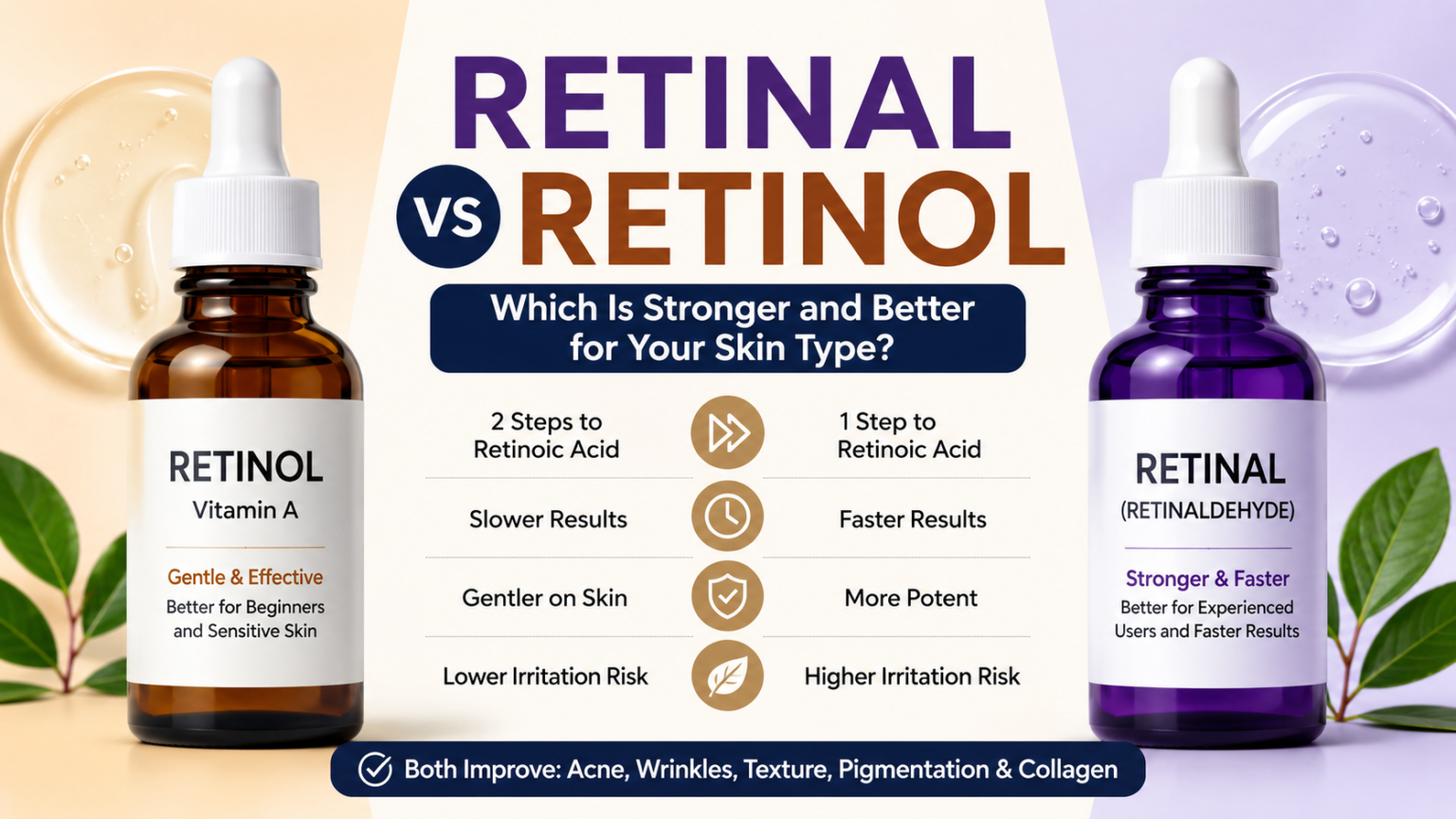

Retinal (retinaldehyde) is generally stronger and works faster than retinol because it converts into retinoic acid in just one step, while retinol needs two steps. However, retinol is usually gentler and better for beginners or sensitive skin. If you want faster visible results for acne, wrinkles, or uneven skin tone, retinal is often more effective. If your skin is sensitive or you are just starting with vitamin A skincare, retinol is usually the safer choice.
Fast Info Table: Retinal vs Retinol
| Feature | Retinol | Retinal (Retinaldehyde) |
|---|---|---|
| Vitamin A Type | Mild retinoid | Stronger retinoid |
| Conversion Steps | 2 steps to retinoic acid | 1 step to retinoic acid |
| Speed of Results | Slower | Faster |
| Skin Irritation | Lower risk | Moderate risk |
| Best For | Beginners, sensitive skin | Experienced users, acne, aging skin |
| Availability | Widely available | Less common |
| Strength | Moderate | High |
What is Retinol?
Retinol is a vitamin A derivative widely used in skincare products to improve skin texture, reduce fine lines, and treat acne. It works by increasing skin cell turnover, which helps remove dead skin cells and boost collagen production over time.
However, retinol is not active immediately. It must convert in the skin:
Retinol → Retinal → Retinoic Acid
Because it requires two conversion steps, results appear gradually. Most dermatologists recommend retinol for beginners because it is easier for the skin to tolerate with less irritation, dryness, or peeling when used correctly.
What is Retinal?
Retinal (retinaldehyde) is a more advanced form of vitamin A. It sits closer to retinoic acid in the conversion process, meaning it works faster on the skin.
Retinal → Retinoic Acid
Because it only needs one conversion step, retinal is considered more potent than retinol. It is often used in treatments targeting acne, pigmentation, and signs of aging such as wrinkles and loss of firmness.
Some modern skincare formulas also use encapsulation technology to make retinal more stable and sometimes less irritating, although it can still be stronger than retinol for sensitive users.
Key Differences in Performance and Skin Results
The main difference between retinal and retinol is speed and strength.
Retinol works gradually, making it ideal for long-term skin improvement without overwhelming the skin barrier. It is commonly used for early anti-aging routines and mild acne management.
Retinal works faster and delivers visible improvements sooner. Users often notice smoother skin texture and clearer tone in a shorter time. However, because it is stronger, it may increase the chance of irritation, especially if overused.
In short:
- Retinol = slow, steady, gentle improvement
- Retinal = faster, stronger, more active results
Dermatology sources generally agree that both ultimately support collagen production and skin renewal, but retinal reaches the active form more efficiently.
Which is Better for Your Skin Type?
Choosing between retinal and retinol depends on your skin type, tolerance, and goals.
If you have sensitive, dry, or reactive skin, retinol is usually the better starting point. It allows your skin to build tolerance slowly while still improving texture and tone.
If your skin is oily, acne-prone, or already used to retinoids, retinal may be a better option because it can work more aggressively on clogged pores, breakouts, and uneven pigmentation.
For anti-aging goals:
- Beginners: Retinol is safer and more sustainable
- Experienced users: Retinal may give faster visible improvements
In both cases, sunscreen use is essential because retinoids increase sun sensitivity.
Conclusion & FAQs
Conclusion
Retinal is stronger and faster-acting, while retinol is gentler and better for beginners. Both are effective vitamin A derivatives that improve skin texture, acne, and signs of aging, but your choice should depend on skin sensitivity and experience level.
FAQs
1. Is retinal better than retinol?
Yes, retinal is generally stronger and works faster, but it may cause more irritation.
2. Can beginners use retinal?
It is possible, but beginners usually start with retinol to avoid irritation.
3. Which is best for wrinkles?
Both help wrinkles, but retinal may show faster results.
4. Can I use retinol or retinal daily?
Yes, but start slowly (2–3 times per week) and increase based on tolerance.